
➤ story by SARAH THOMPSON • photos by GRUBBANA STUDIOS
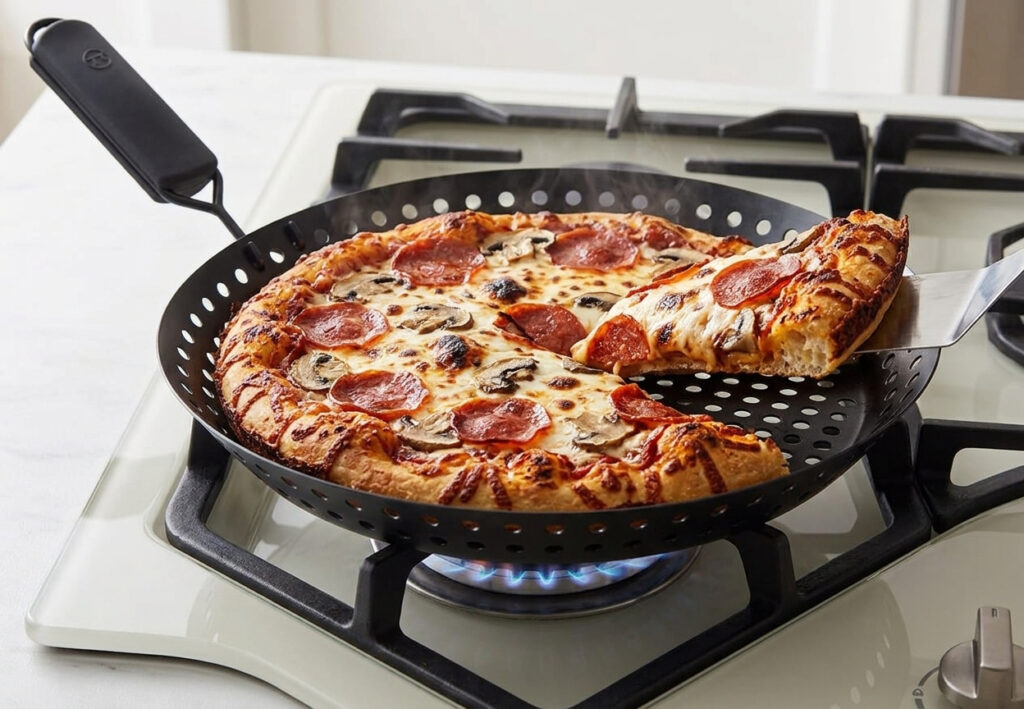
Every time I wander through a thrift store, I inevitably come across some oddball kitchen gadget that makes me think, Well, no wonder that ended up here. That was exactly my reaction when I spotted a frying pan covered in holes.
Related: How to Make Bird Pizzeria’s Famous Kale Caesar Salad
At first, I couldn’t figure out what it was for. Eventually, I realized it was probably meant for foods you’d normally cook directly over a flame, like charring peppers or warming tortillas. But my mind immediately went somewhere else: pizza.
For just a few dollars, curiosity got the better of me.
For the record, I have nothing against homemade pizza. My real obstacle is my oven, which doubles as storage for bulky pots, pans, and baking sheets. Rather than empty it every time a pizza craving hit, I wondered if this strange perforated skillet could finally give me the crispy stovetop pizza I’d been chasing.
Long story short: yes, indeed.
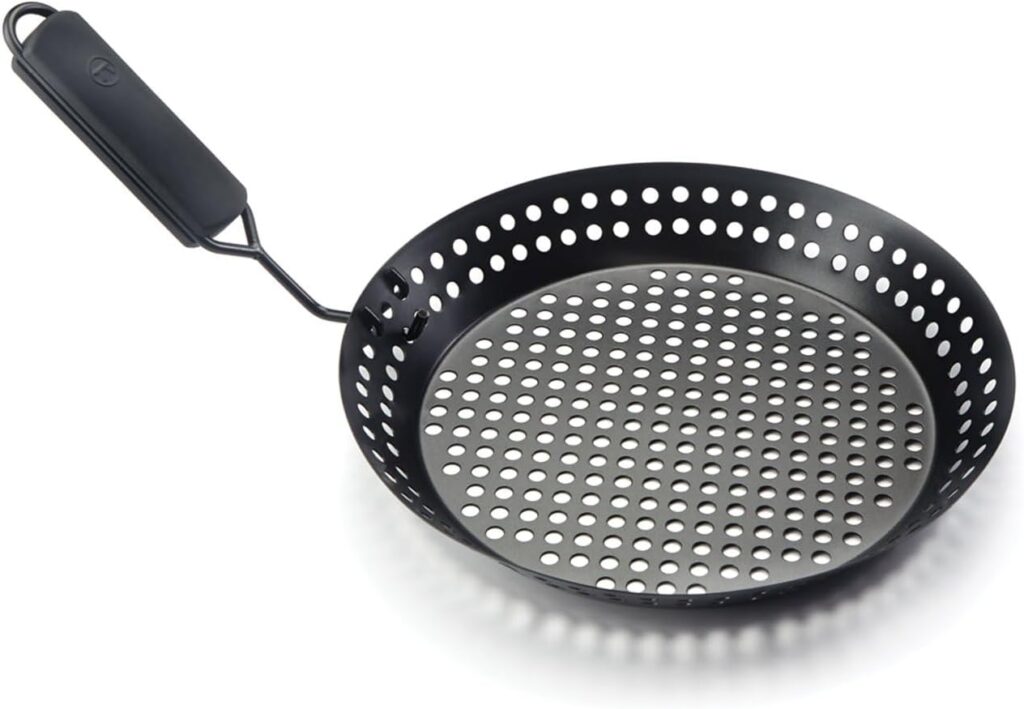
Stovetop Pizza Pan with Holes (from $17)
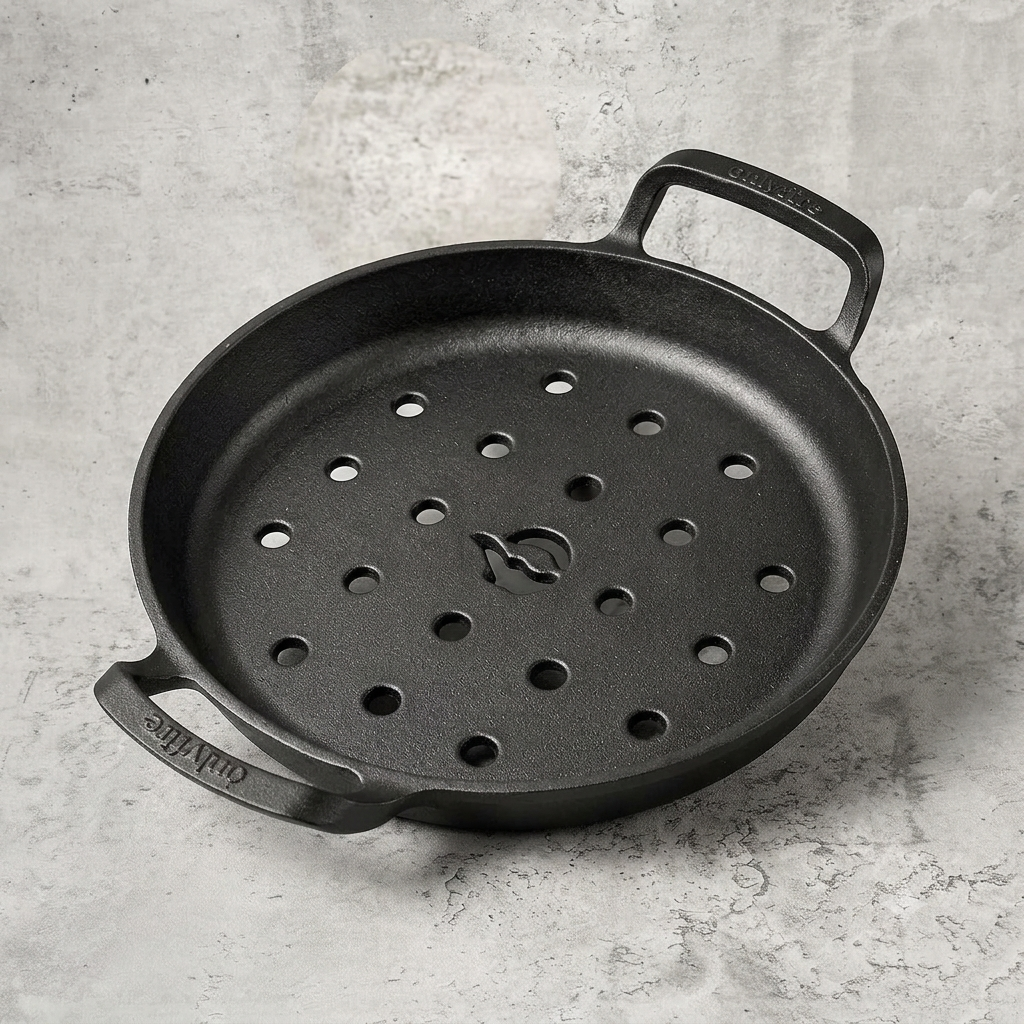
Cast Iron Stovetop Pizza Skillet with Holes (from $24)
How to Make Stovetop Pizza
Step 1: Start with the right pan.
After plenty of experimenting, I’ve found that cast iron skillets make the best stovetop pizza. Skip coated nonstick pans, which don’t retain or distribute heat nearly as well. That said, this thrifted perforated grill skillet produced the crispiest crust I’ve ever made.
To recreate the method, place the perforated skillet inside a larger cast iron or heavy-bottomed skillet. Think of it as a double-pan setup.
Step 2: Cook any raw toppings first.
If you’re using vegetables like mushrooms, onions, or peppers, sauté them ahead of time. Since stovetop pizza cooks quickly, there’s not enough time for raw vegetables to fully soften.
Step 3: Set the crust.
Heat the larger skillet over medium-high heat. While it heats, stretch your pizza dough into the cold perforated pan, then immediately add your sauce, cheese, and any toppings.
Place the perforated pan directly inside the hot skillet. The intense heat transfers through the holes, rapidly setting the bottom of the dough before it has a chance to sag through the openings. Cook for about 3 to 4 minutes, or until the edges look opaque and the crust feels sturdy enough to lift.
Step 4: Finish over direct heat.
Once the crust has set, carefully lift the perforated pan out of the bottom skillet and set the larger skillet aside.
Place the perforated pan directly over the burner. On a gas stove, this means directly over the flame. On an electric stove, place it on the heating element.
Cook over high heat until the bottom develops golden brown spots, then flip the pizza and reduce the heat to medium. This creates a beautifully blistered crust without burning it.
Step 5: Melt the toppings.
After flipping, add your toppings if you haven’t already, then cover the pan with a lid. Continue cooking over medium heat until the cheese is fully melted and the toppings are heated through.
Why It Works
The secret is the airflow.
Unlike a traditional skillet, the perforated pan allows heat to travel directly through the holes while still supporting the dough once the bottom begins to set. The result is a crust that develops crisp, lightly charred spots much like a pizza baked on a stone, but without ever turning on the oven.
Using the second skillet underneath during the first few minutes is what makes the method work. It provides solid, even heat to quickly firm up the dough before it can sink into the perforations. Once the crust has enough structure, moving the pan directly onto the burner exposes it to concentrated heat that crisps the bottom even further.
It’s an unconventional setup, but after trying countless stovetop pizza methods, it’s easily the closest I’ve come to pizzeria-style results without using an oven.

Leave a Reply